The little library of rest
Master the gentle art of the power nap
Learn the science of short sleep, find your perfect nap length, and wake up at exactly the right moment — with a little help from Dozer the bear and our free, privacy-first nap timer app.

Why nap at all?
The Science of Recharging
While you're awake, a chemical called adenosine slowly builds up in your brain, creating "sleep pressure" — that heavy, foggy afternoon feeling. A short nap actively clears it out, like emptying a full cup.
Taking brief, strategic rests during the day is not a sign of laziness; it is a proven biological tool to reset your brain, enhance cognitive function, and dramatically improve your daily output.
Performance
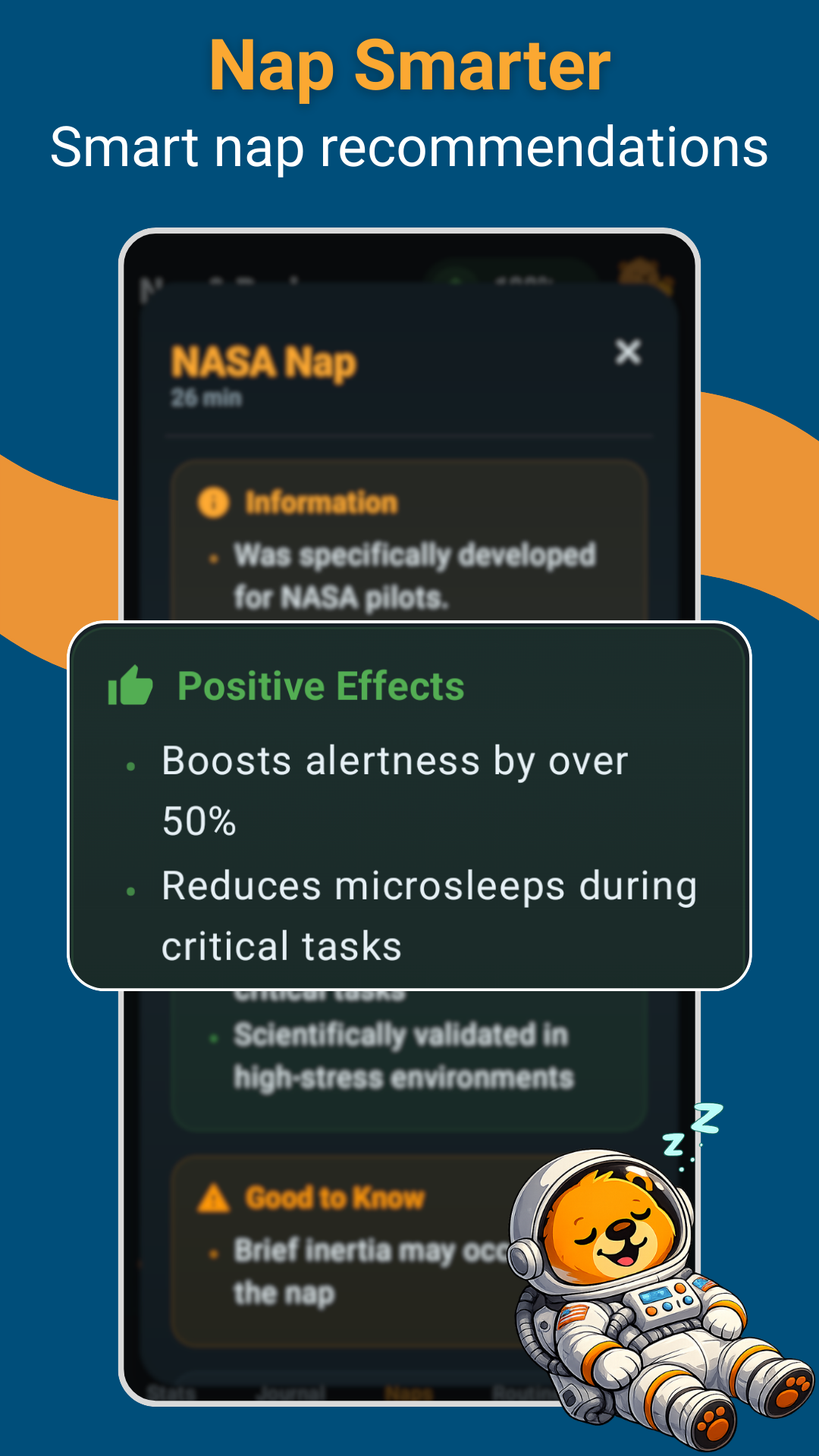
NASA found pilots performed 34% better after a short in-flight nap.
Alertness
The same study measured a 54% increase in alertness after just one nap.
The NASA Nap
The famous sweet spot: long enough to recharge, short enough to avoid grogginess.
Find your nap
Proven Nap Types
Scientifically validated durations to match your schedule and cognitive needs.
A bedtime story for grown-ups
How to take the perfect nap
Five small steps between you and waking up like a new person.
Pick the right moment
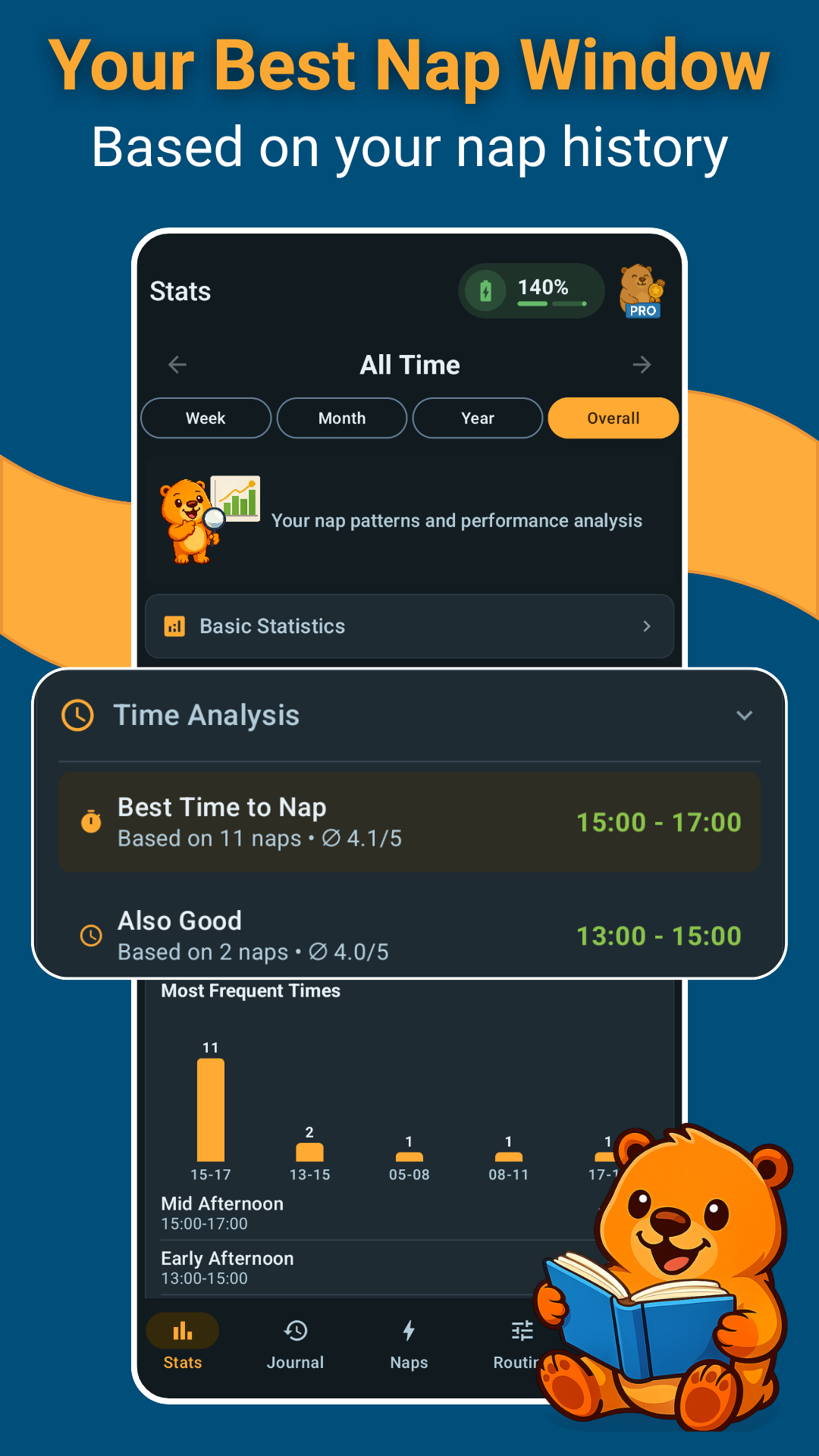
Aim for the early afternoon, between 1 and 3 PM — your body's natural energy dip. Napping later can push your bedtime back.
Make it cool, dark and quiet
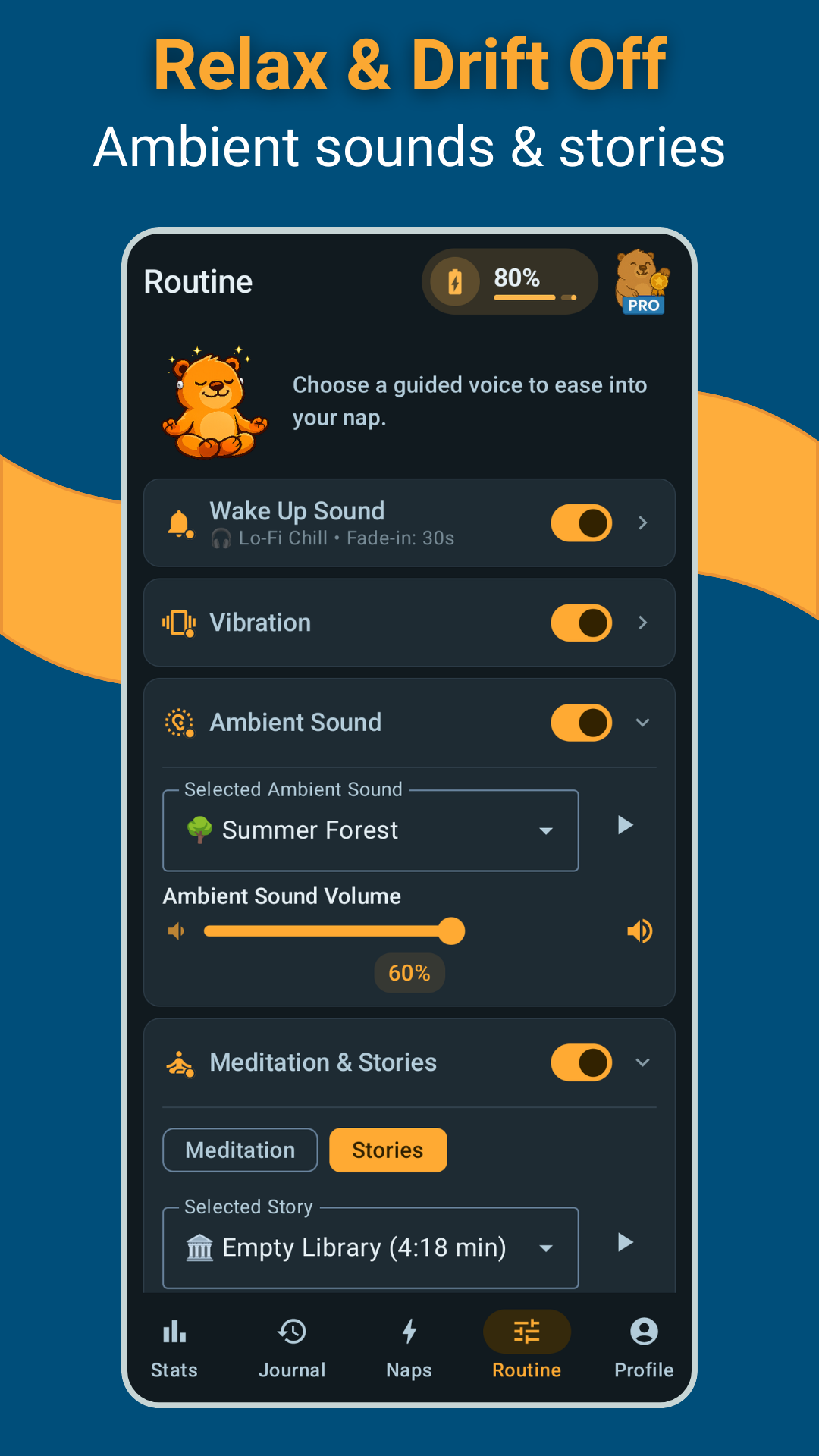
A slight drop in temperature signals your body it's time to sleep. Dim the lights, silence notifications, maybe add some gentle ambient sound.
Set a timer — 10 to 20 minutes
The timer is what turns a risky doze into a power nap. It wakes you in light sleep, before deep sleep and grogginess can begin.
Don't stress about falling asleep
Even quiet rest with closed eyes is restorative. If you drift off, wonderful — if not, your brain still gets a break. No pressure.
Get up when the alarm rings
Resist the snooze. Stand up, stretch, get some light — the refreshed feeling arrives within a couple of minutes.
Pro technique
The Coffee Nap Hack
Drink a cup of coffee right before you lie down for a 20-minute power nap. Caffeine takes about 20 minutes to be absorbed — while you rest, your brain clears adenosine, and the caffeine kicks in at the exact moment you wake up. A natural recharge and a chemical boost, perfectly synchronized.

From the nap journal
Read more about the science of rest
Short, science-backed reads for curious nappers.
The Post-Lunch Dip: Why You Feel Tired at 2 PM
It happens almost every day, right on schedule. The common explanation is lunch — but that's not actually true. Meet your circadian rhythm.
Read articlearrow_forwardThe Ideal Nap Length: 10, 20, or 90 Minutes?
Not all naps are created equal. Each duration does something different inside your brain — here's how to choose the right one.
Read articlearrow_forwardThe NASA Nap: Boost Performance by 34%
NASA's landmark 1995 study proved a 26-minute cockpit nap boosted pilot performance by 34% and alertness by 54%.
Read articlearrow_forwardSleep Inertia: Why You Wake Up Tired
Ever napped hoping to feel refreshed, only to wake up like a zombie? That's sleep inertia — and timing is the key to avoiding it.
Read articlearrow_forward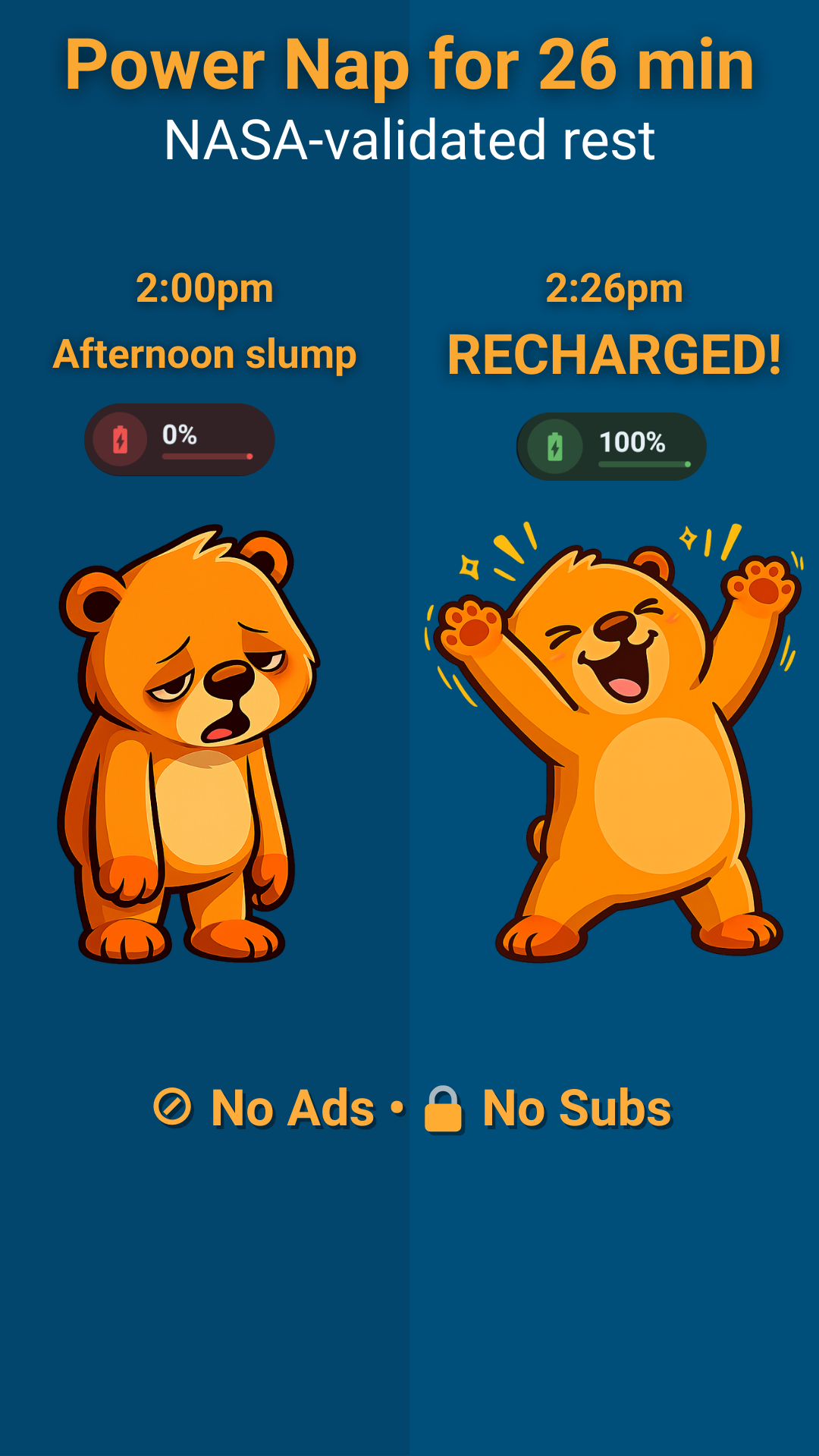

Meet the app
Your pocket nap coach
Nap & Recharge puts everything on this page into a single, friendly timer — built on the science, wrapped in a cozy design, and completely respectful of your privacy.
-
verified_user
Privacy First
100% Local Storage · No Cloud Sync or Tracking -
savings
No Subscriptions
Pay Once, Keep Forever · No Hidden Monthly Fees -
psychology
Science-Backed
15-30 Min Timers Prevent grogginess -
battery_charging_full
Battery Charge
Gamified Rest Consistency · 50% Bonus for First Nap

Gamification
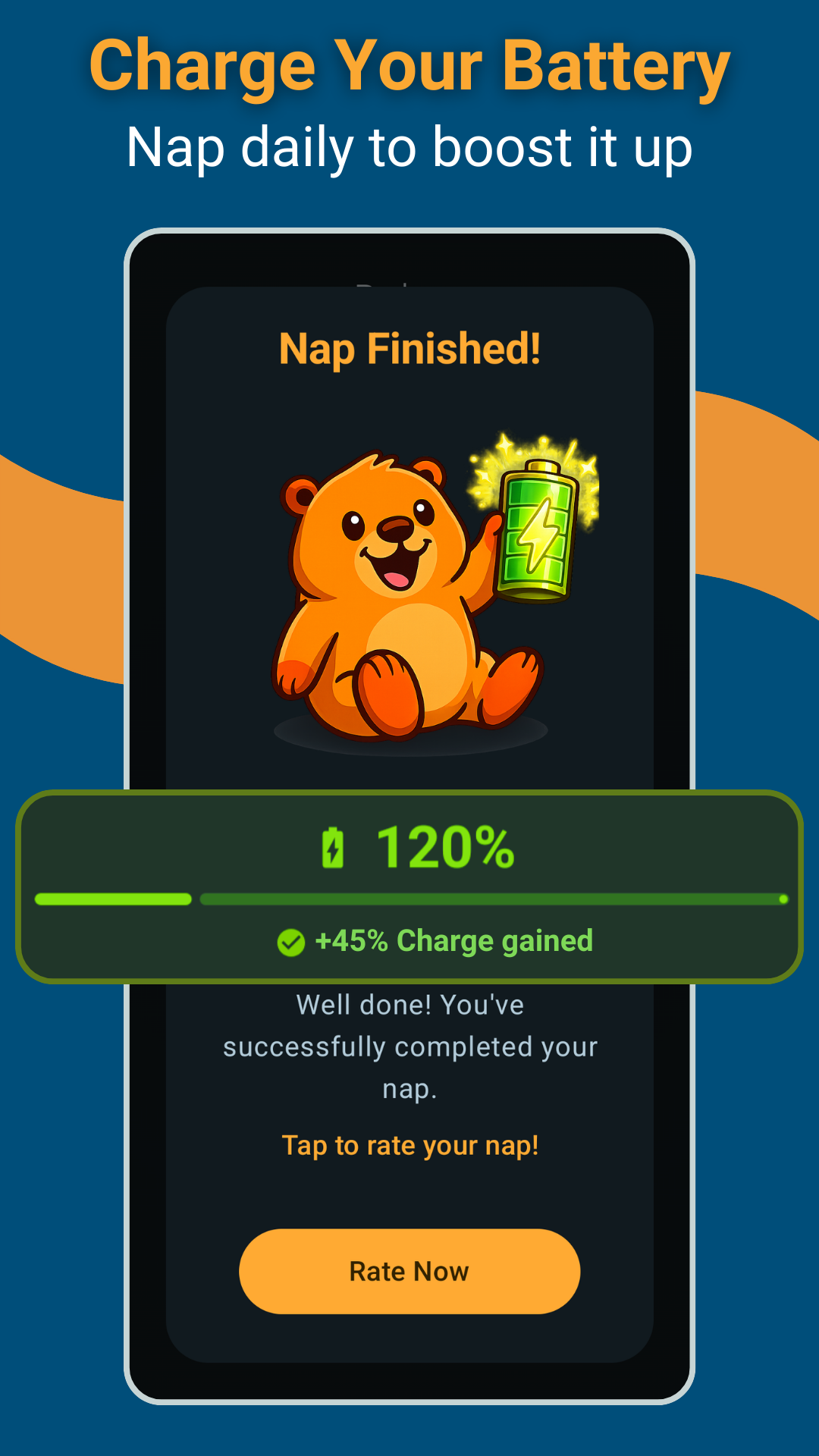
Charge your Battery
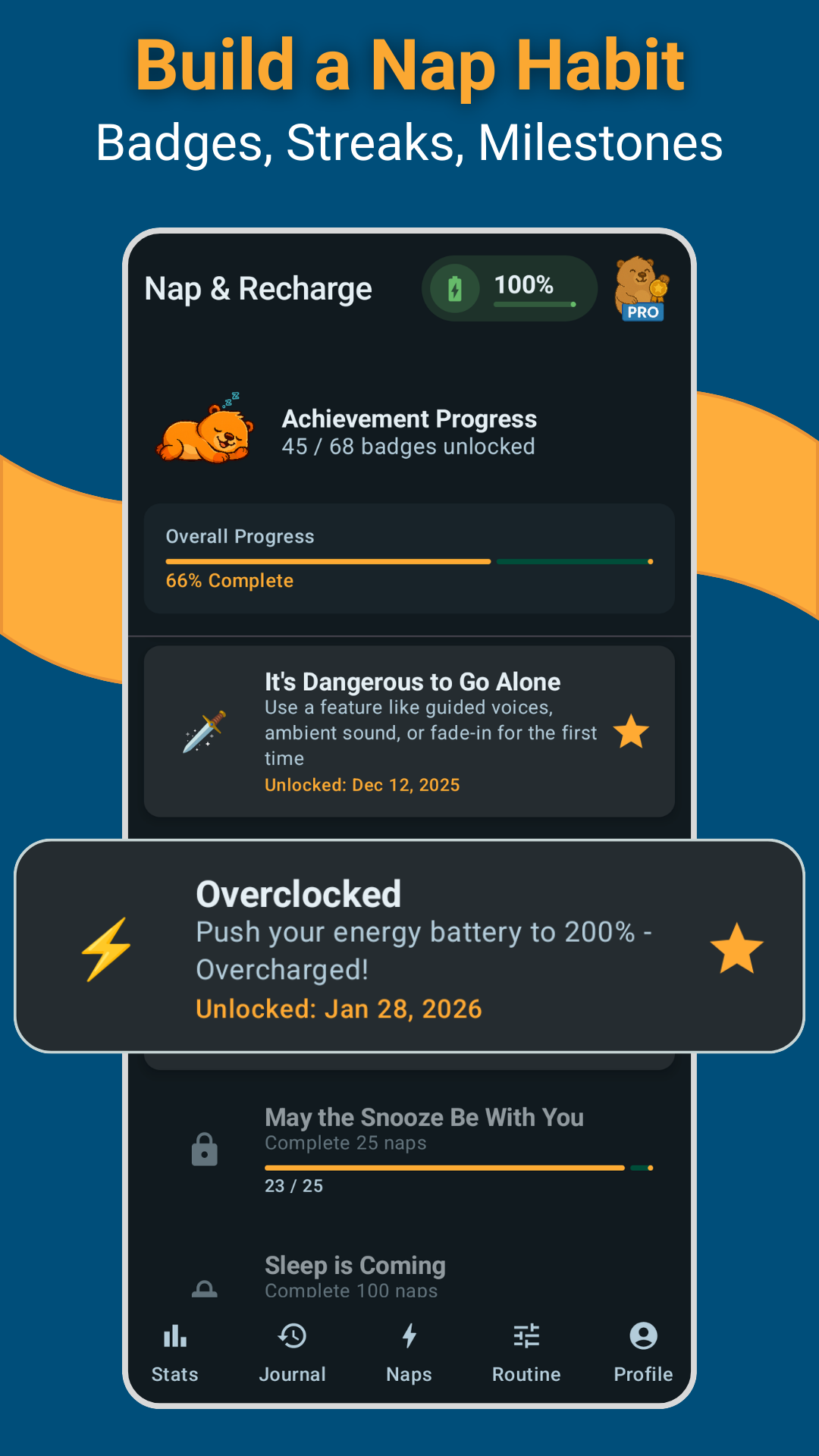
Gamify your rest! Your battery charges with every nap. Your first daily nap grants a 50% bonus. Form a healthy habit — miss a day, and the battery drains.
Wake-up Experience
Gentle Wake-up, Your Way
Choose from a full library of wake-up sounds — from gentle nature sounds to uplifting melodies. Pair it with a customizable vibration fade-in that softly increases intensity, so you wake up feeling refreshed instead of startled.

Smart Timer
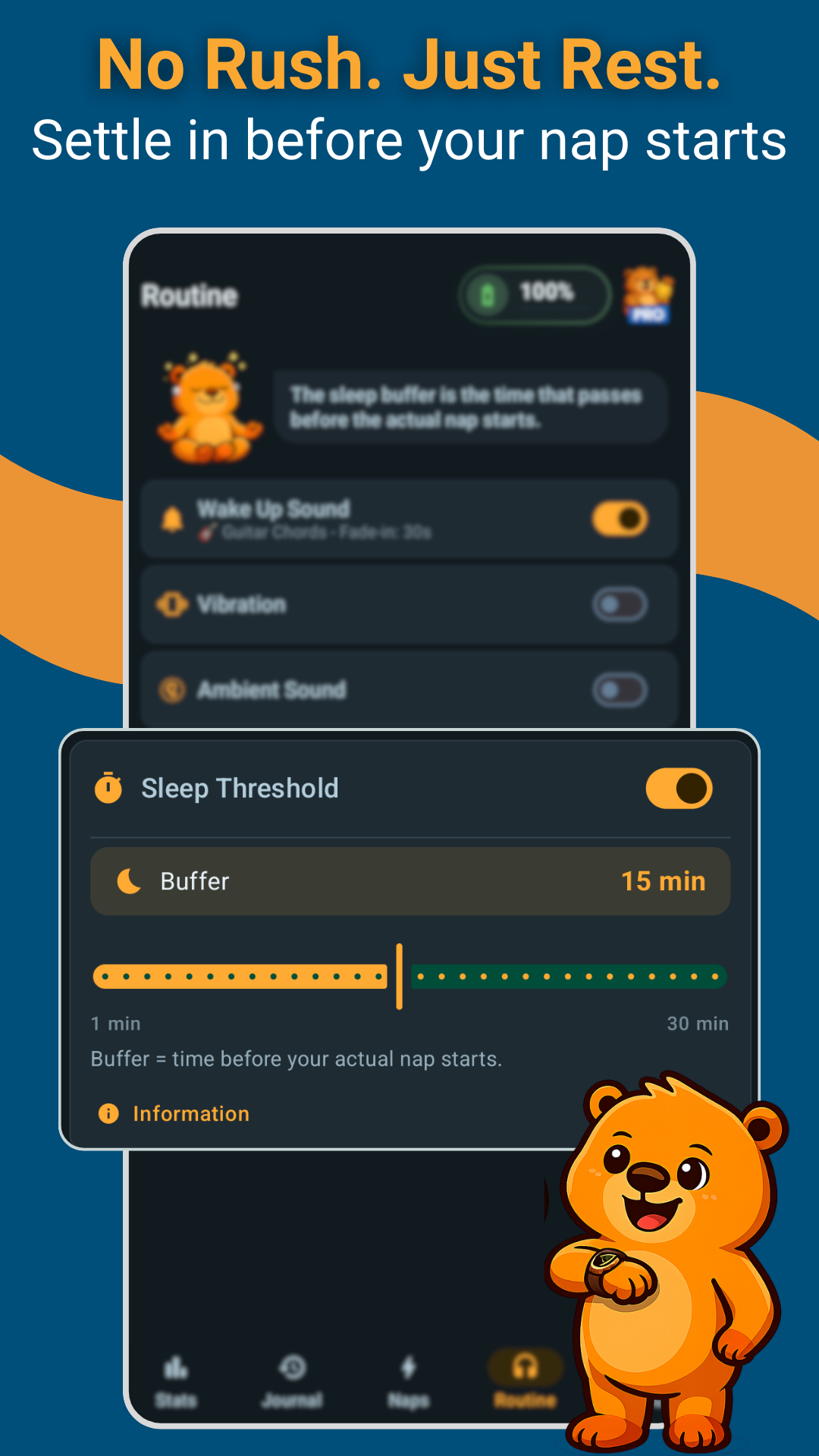
The Sleep Buffer
Not sure if you'll actually fall asleep? That's totally fine. Short naps are designed for that — even just resting your body and mind is beneficial. The Sleep Buffer gives you a stress-free window before your timer even starts.

Honest pricing
Free vs Pro
Unlock the full potential. No subscriptions, just a single seamless upgrade.
- check_circleAd-Free Experience
- check_circle100% Local Privacy
- check_circleWake-up Sounds
- check_circleAmbient Sounds
- check_circleStatisticsWeekly
- check_circleSleep Buffer1–3 min
- check_circleBattery CapMax 250%
- check_circleEverything in Free
- check_circleStatisticsYearly / All-Time
- check_circleWake-up SoundsFull Library
- check_circleGuided MeditationsFull Library
- check_circleSleep Buffer1–30 min
- check_circleBattery CapMax 1000%
- check_circleThemesFull Access
Google Play Rating
What Users Say
"Exactly what I was looking for. Used the free version once and ended up buying pro for the extra options. Perfect."
"Works flawlessly. It feels better to use the app for 15 minutes than to aimlessly scroll through Instagram for 3 hours."
"Simple, intuitive, informative. I really like it."
Sleepy questions
Frequently Asked Questions
How long should a power nap be?add
For most people, 10–20 minutes is ideal. You stay in light sleep, wake up refreshed and avoid sleep inertia. If you have 90 minutes, a full sleep cycle including REM sleep is also a great option — anything between 30 and 60 minutes risks waking from deep sleep and feeling groggy.
What is the best time of day to nap?add
The early afternoon, roughly between 1 and 3 PM. Your circadian rhythm naturally dips then — the famous post-lunch slump. Napping later than about 4 PM can interfere with your night sleep.
Why do I wake up groggy after a nap?add
That heavy feeling is called sleep inertia. It happens when you wake up from deep (slow-wave) sleep, which usually begins after about 30 minutes. Keeping naps to 20 minutes or less — or extending them to a full 90-minute cycle — avoids it almost entirely.
What is a coffee nap?add
You drink a coffee right before a 20-minute nap. Caffeine needs about 20 minutes to kick in, so it takes effect exactly as you wake up — while the nap has cleared adenosine from your brain. The combination boosts alertness more than either alone.
Is the Nap & Recharge app free?add
Yes. The Android app is free with no ads and no tracking — all data stays on your device. An optional one-time Pro upgrade unlocks extras like the full sound library, longer sleep buffers and lifetime statistics. There are no subscriptions.
Can napping replace night sleep?add
No. Naps are a supplement, not a substitute. They restore alertness and focus during the day, but your body still needs 7–9 hours of consolidated night sleep for full physical and mental recovery.

Ready to Recharge?
Download Nap & Recharge for free on Google Play.